
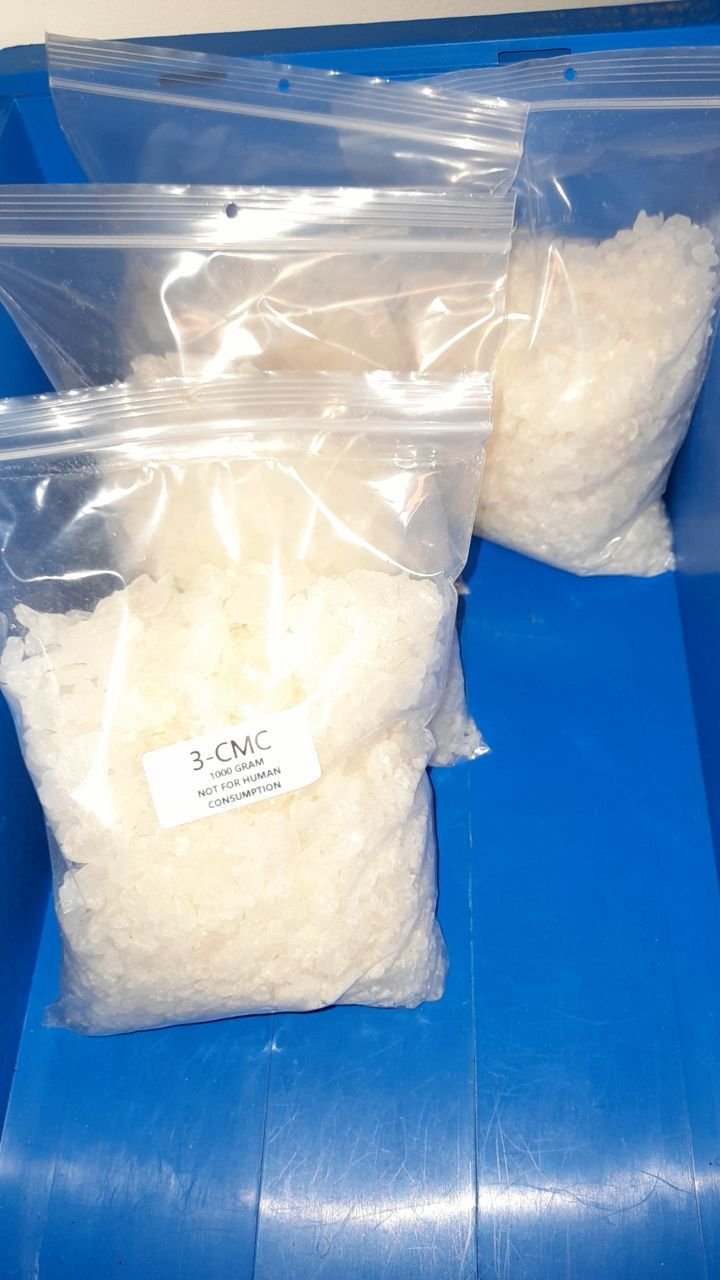

3-CMC (3-Chloromethcathinone) | Analytical Research Profile
Are you seeking validated analytical data on buy 3-CMC Crystal Powder for neuropharmacological or forensic investigations? 3-Chloromethcathinone (3-CMC), also known as Clophedrone, is a synthetic substituted cathinone characterized by a chlorine atom at the meta position of the phenyl ring. Within the scientific community, it is a primary subject for researchers investigating monoamine reuptake inhibition, synaptic transport dynamics, and the toxicological profiling of halogenated stimulants.
For laboratories looking to buy research chemicals online, utilizing high-purity crystal powder ensures maximum solubility and allows for the preparation of precise molar solutions for in vitro and behavioral assays.
Chemical Structure & Pharmacodynamics
The pharmacological profile of 3-CMC is dictated by the electronegativity and size of the chlorine substituent. As a structural analogue of 3-MMC and 4-CMC, its interaction with the central nervous system is highly specific:
-
Transporter Binding: 3-CMC acts as a potent releaser and reuptake inhibitor of dopamine and serotonin. Researchers explore how the meta-chlorine substitution influences the selectivity ratio between the dopamine transporter (DAT) and the serotonin transporter (SERT).
-
Neurotoxicity Assessments: A major area of study involves comparing the potential neurotoxic effects of 3-CMC against its para-substituted isomer (4-CMC), specifically regarding its impact on serotonergic neurons.
-
Crystal Integrity: The high-purity crystalline form provides excellent chemical stability, which is vital for long-term longitudinal studies where compound degradation must be minimized.
Primary Research Applications
buy 3-CMC Crystal Powder analytical standards are essential for several advanced scientific domains:
-
Neuropharmacological Mapping: Investigating the impact of halogenated cathinones on the mesolimbic pathway and reward-seeking behavior.
-
Forensic Toxicology: Developing high-resolution LC-MS/MS methods to accurately identify 3-CMC in biological samples and distinguish it from other positional isomers.
-
Structure-Activity Relationship (SAR): Utilizing 3-CMC as a reference point to understand how varying the halogen (Chlorine vs. Bromine vs. Fluorine) affects the potency and safety profile of phenethylamine derivatives.
-
Metabolic Studies: Identifying the primary metabolites produced during the breakdown of halogenated cathinones to predict long-term biological clearance.
Technical Specifications
| Feature | Details |
| IUPAC Name | 1-(3-chlorophenyl)-2-(methylamino)propan-1-one |
| CAS Number | 1049677-59-9 |
| Molecular Formula | $C_{10}H_{12}ClNO$ |
| Formulation | High-Purity Crystalline Powder |
| Purity Grade | Analytical Grade ($\ge$98%) |
Safety, Regulatory Status, and Procurement
3-CMC is intended strictly for laboratory research and forensic applications. It is not for human or veterinary consumption.
-
Regulatory Compliance: Researchers must verify the current legal status of 3-CMC in their region. Halogenated cathinones are increasingly restricted under international drug control conventions and local “Analogue Acts.”
-
Handling Protocols: Due to its potential potency as a CNS stimulant, 3-CMC must be handled in a controlled laboratory setting with appropriate Personal Protective Equipment (PPE).
-
Documentation: Every order is accompanied by a batch-specific Safety Data Sheet (SDS) detailing solubility and secure storage requirements.
Why Source buy 3-CMC Crystal Powder Through Verified Channels?
Reliable scientific conclusions depend on the absence of unreacted precursors or heavy metal catalysts in the research material. Sourcing through a legitimate research chemical supplier ensures that your 3-CMC crystal powder provides the standardized purity required for repeatable, publication-quality results.
| Quantity in grams | 10, 100, 1000, 10000, 2, 25, 250, 5, 50, 500, 5000 |
|---|
Related products

3-MMC
3-MMC
3-MMC

3-CMC (Meow)
3-MMC
2-MMC
3-MMC
3-MMC